

Published by Affinity Medical Clinics
Why first aid preparedness is more than just having a kit on the wall
Why First Aid Readiness Still Matters
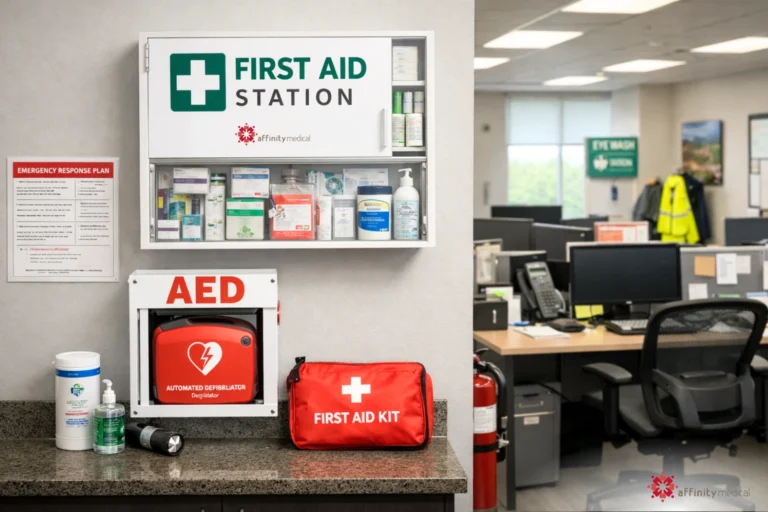
A fully equipped workplace first aid station with an AED, medical supplies, and emergency response information.
Many workplaces assume they are “first aid ready” simply because they have a first aid kit on site. In reality, true first aid readiness goes far beyond supplies. It involves training, planning, accessibility, and regular review.
When a medical incident happens at work, the first few minutes are critical. A well-intentioned but unprepared response can delay care, worsen outcomes, or expose both employees and employers to unnecessary risk.
The Common Misconception About First Aid
One of the most common misconceptions is that first aid is a checklist item—something to comply with during inspections rather than an active safety system.
In practice, many companies have:
- Incomplete or expired first aid supplies
- No clearly designated first aiders
- Employees unsure who to call during an emergency
- First aid kits that are inaccessible or poorly located
These gaps often become apparent only when an incident occurs.
What Companies Often Overlook in First Aid Readiness
1. Adequate and Trained First Aiders
Having a first aid kit is not enough if no one knows how to use it properly. Employers should ensure:
- Designated first aiders are trained and certified
- Training is refreshed regularly
- First aiders are present across shifts and departments
Relying on a single trained individual creates risk when that person is absent.
2. Accessibility of First Aid Supplies
First aid kits are sometimes:
- Locked away
- Stored in remote offices
- Known only to a few employees
In an emergency, every second counts. Supplies should be:
- Clearly marked
- Easily accessible
- Located near high-risk areas
3. Readiness for Medical (Not Just Injury) Emergencies
Many first aid plans focus heavily on cuts, wounds, and trauma, but overlook medical emergencies such as:
- Sudden collapse
- Heart-related symptoms
- Diabetic emergencies
- Asthma attacks
- Seizures
Workplaces should be prepared to respond to both injury and illness, especially given the prevalence of chronic conditions among working adults.
4. Clear Emergency Communication
Employees often don’t know:
- Who to notify first during a medical emergency
- When to call emergency services
- Who is authorized to make decisions
Clear communication protocols should be established and communicated regularly to avoid confusion during emergencies.
5. Regular Inspection and Maintenance
First aid kits require routine checks to ensure:
- Supplies are complete
- Items are not expired
- Equipment is clean and functional
Expired or missing items can render a kit ineffective at the moment it is needed most.
6. Alignment With Workplace Risks
A generic first aid kit may not be appropriate for all workplaces. For example:
- Manufacturing and construction sites may require trauma-focused supplies
- Offices may need equipment for medical emergencies such as AEDs
- Workplaces with heat exposure need readiness for heat-related illness
First aid preparedness should reflect the specific risks of the workplace.
First Aid Under DOLE OSH Standards
Philippine Occupational Safety and Health regulations require employers to:
- Provide adequate first aid facilities
- Ensure trained first aid personnel are available
- Respond promptly to workplace injuries and illnesses
First aid readiness is not optional—it is a core component of OSH compliance.
How On-Site Clinics Strengthen First Aid Readiness
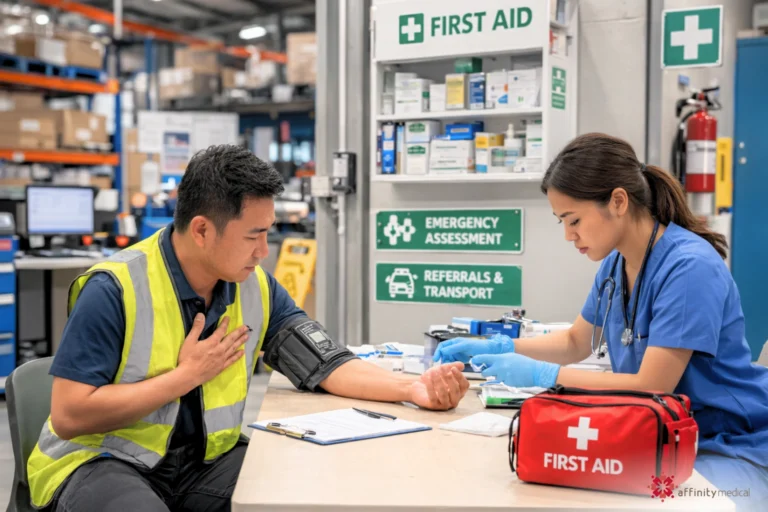
An occupational health nurse conducts an immediate medical assessment for a worker at a workplace first aid station.
Organizations with on-site medical clinics significantly enhance their first aid capabilities by:
- Providing immediate professional assessment
- Managing both minor and urgent medical cases
- Supporting trained first aiders during incidents
- Coordinating referrals and emergency transport when needed
On-site clinics transform first aid from a basic response into a structured medical support system.
Prevention Starts Before an Emergency Happens
Strong first aid readiness also supports prevention by:
- Identifying health risks early
- Monitoring chronic conditions
- Educating employees on recognizing warning signs
- Reducing the likelihood of medical emergencies escalating
Preparedness reduces panic—and panic reduces poor decision-making.
How Affinity Medical Clinics Supports First Aid Readiness
At Affinity Medical Clinics, we help organizations improve first aid preparedness through:
- Workplace risk assessments
- First aid and emergency response training
- On-site clinic setup and support
- Review of first aid facilities and protocols
- Integration of first aid systems into OSH programs
Our focus is practical readiness that works when it matters most.
Preparedness Is a Responsibility
First aid readiness is not about compliance alone—it is about protecting people. Companies that invest in proper first aid systems demonstrate care, foresight, and leadership.
For guidance on strengthening your workplace’s first aid readiness, Affinity Medical Clinics is ready to support your organization.