

Published by Affinity Medical Clinics
A leadership perspective on employee health, safety, and organizational resilience
Workplace Health Is Not Just an HR Issue
In many organizations, workplace health is delegated to Human Resources, safety officers, or compliance teams. While these functions play an essential role, workplace health is ultimately a leadership responsibility.
The tone set by leadership—what is prioritized, funded, and enforced—determines whether health and safety policies are truly practiced or merely documented.
Leadership Shapes Workplace Culture
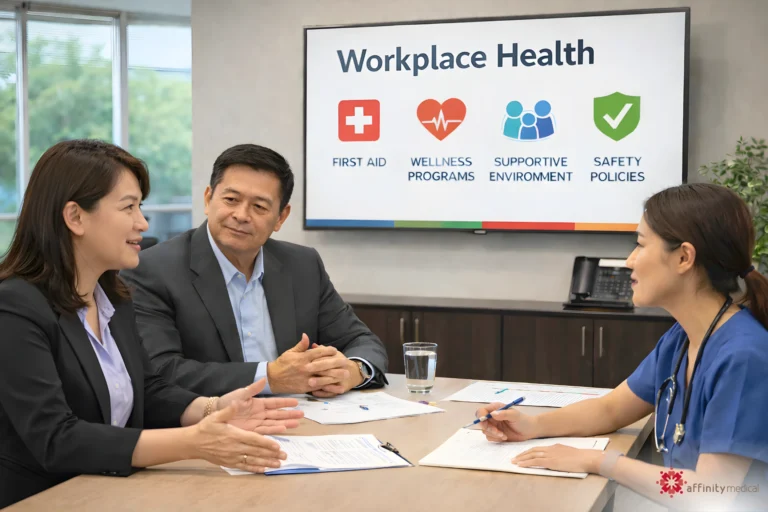
Company leaders collaborate with an occupational health nurse to strengthen workplace health and safety initiatives.
Employees take cues from leadership behavior, not policy manuals. When leaders:
- Normalize working while sick
- Ignore safety shortcuts to meet deadlines
- Treat health programs as administrative burdens
Employees learn that health is secondary to output.
Conversely, when leaders model responsible behavior—respecting health protocols, supporting preventive care, and responding decisively to risks—health becomes part of the organization’s culture, not just its rules.
Health Risks Are Business Risks
Workplace health issues rarely stay isolated at the individual level. Unmanaged health risks can lead to:
- Increased absenteeism and presenteeism
- Workplace incidents and medical emergencies
- Operational delays and productivity loss
- Higher insurance and healthcare costs
- Reputational and compliance exposure
Leadership decisions influence whether these risks are anticipated and managed or allowed to escalate.
The Cost of Reactive Leadership
Organizations that treat health reactively—responding only after incidents occur—often experience:
- Disrupted operations
- Confusion during medical emergencies
- Low employee trust
- Higher long-term costs
Reactive leadership places teams in a constant cycle of response rather than prevention. Over time, this erodes resilience and stability.
Preventive Health Requires Leadership Commitment
- Support early medical screening and monitoring
- Encourage employees to seek care without fear
- Allocate time and resources for training and preparedness
Health Is Part of Duty of Care
- Safe working conditions
- Access to medical support
- Emergency preparedness
- Reasonable accommodations when health issues arise
Strong Leaders See Health as a Strategic Asset

Supportive company leaders engage with employees in a positive work environment that prioritizes workplace health and wellbeing.
- Performance and focus
- Retention and morale
- Safety and reliability
- Long-term sustainability
Leadership During Health Incidents
- Reduces panic
- Ensures appropriate response
- Builds trust among employees
- Reinforces confidence in the organization
Workplace Health Is a Shared Responsibility—Led From the Top
- Ask the right questions
- Support preventive programs
- Listen to health and safety feedback
- Act on identified risks
How Occupational Health Supports Leadership
- Early insight into workforce health trends
- Data to support informed decisions
- Systems to manage risk proactively
- Frameworks for emergency preparedness
How Affinity Medical Clinics Supports Leadership-Led Health
- Occupational health assessments
- Preventive medical examinations
- On-site clinics and medical support
- Emergency preparedness planning
- Health education aligned with workplace realities
Leadership Is Measured by What You Protect
Leadership is often measured by growth, performance, and results. But it is also measured by how well an organization protects its people.
When leaders take responsibility for workplace health, they create environments where employees feel safe, valued, and supported—conditions that allow both people and businesses to perform at their best.
For guidance on leadership-driven workplace health programs, Affinity Medical Clinics is ready to partner with your organization.