

Published by Affinity Medical Clinics
A practical guide to workplace immunization planning
Why Corporate Vaccination Programs Matter
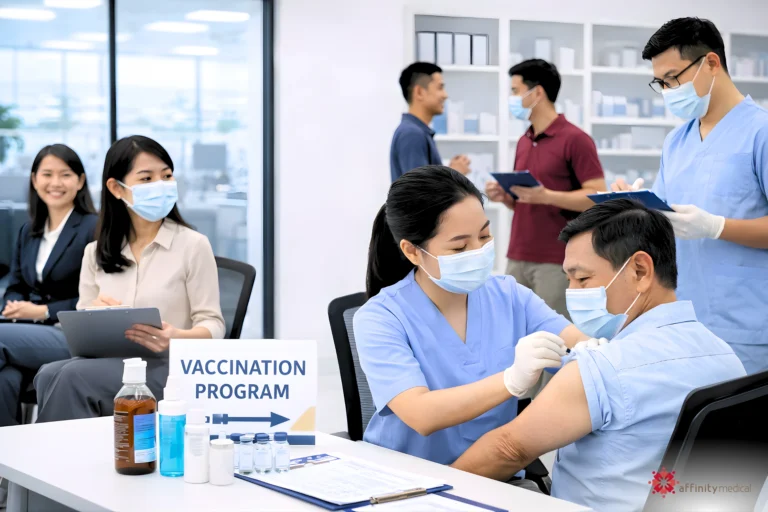
An on-site vaccination program in action, promoting employee health and workplace safety.
Organizations with on-site medical clinics significantly enhance their first aid capabilities by:
- Providing immediate professional assessment
- Managing both minor and urgent medical cases
- Supporting trained first aiders during incidents
- Coordinating referrals and emergency transport when needed
On-site clinics transform first aid from a basic response into a structured medical support system.
Vaccination programs in the workplace are no longer limited to outbreak response. For many organizations, they have become part of a broader strategy to protect employee health, reduce operational disruption, and support preventive care.
When designed thoughtfully, corporate vaccination programs help companies maintain workforce continuity while demonstrating a clear commitment to employee wellbeing.
What Is a Corporate Vaccination Program?
A corporate vaccination program is an employer-initiated initiative that provides recommended vaccines to employees, either on-site or through coordinated clinic access. These programs are typically aligned with:
- Occupational health and safety goals
- Public health recommendations
- Industry-specific risk profiles
They may be conducted annually, seasonally, or in response to specific health risks.
Common Vaccines Offered in the Workplace
The type of vaccines included depends on the nature of work, employee demographics, and risk exposure.
Common workplace vaccination programs include:
- Influenza (flu) vaccination
- Hepatitis B vaccination (especially for healthcare, laboratory, and food-related roles)
- Tetanus and booster vaccines
- Travel-related or role-specific vaccines, when applicable
Importantly, not all employees require the same vaccines. Programs should be risk-based rather than one-size-fits-all.
Key Considerations for Employers
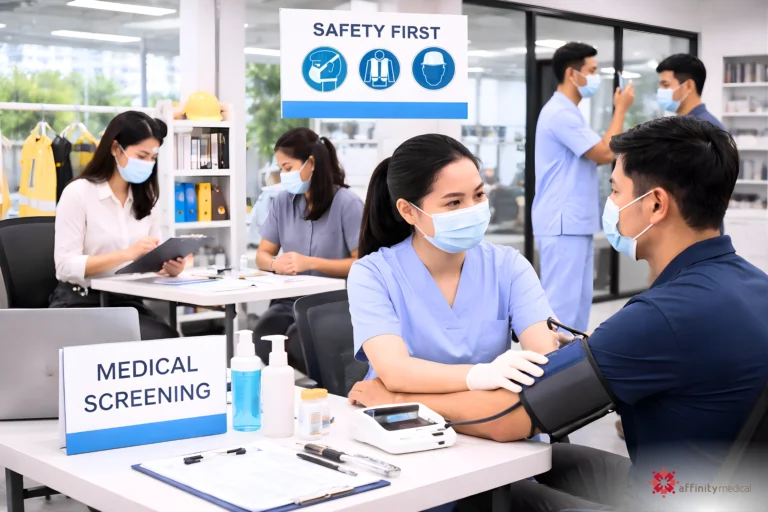
Promoting workplace health through regular medical screening and safety-first practices.
1. Workplace Risk Assessment
Before launching a vaccination program, employers should evaluate:
- Nature of work and exposure risks
- Frequency of public or client interaction
- Travel requirements
- Presence of high-risk populations
A proper assessment ensures the program is relevant, appropriate, and medically justified.
2. Voluntary Participation and Informed Consent
Vaccination programs should respect employee autonomy. Best practices include:
- Clear explanation of benefits and risks
- Voluntary participation
- Proper medical screening prior to vaccination
- Informed consent documentation
Trust and transparency are essential for program acceptance.
3. Medical Screening and Safety
Not all employees are eligible for all vaccines. Programs must include:
- Pre-vaccination health assessment
- Identification of contraindications
- Post-vaccination observation and guidance
Vaccination should always be conducted by licensed medical professionals in accordance with clinical standards.
4. On-Site vs Off-Site Administration
Employers may choose:
- On-site vaccination, which improves convenience and participation
- Clinic-based vaccination, suitable for smaller teams or staggered schedules
The decision should consider workforce size, logistics, and operational impact.
5. Documentation and Data Privacy
Proper records are critical for:
- Medical documentation
- Occupational health monitoring
- Audit and compliance requirements
Vaccination data must be handled in compliance with data privacy regulations.
Benefits of Well-Planned Vaccination Programs
When implemented correctly, corporate vaccination programs can:
- Reduce sick leave and absenteeism
- Lower risk of workplace outbreaks
- Protect vulnerable employees
- Improve productivity during peak illness seasons
- Reinforce a culture of preventive health
These benefits extend beyond immediate health outcomes and support long-term workforce resilience.
Addressing Common Concerns
“Vaccination programs are costly.”
When compared to productivity losses from illness, vaccination programs are often cost-effective, particularly in large or high-risk workplaces.
“Employees may resist vaccination.”
Clear communication, voluntary participation, and education significantly improve acceptance.
“Vaccination replaces other safety measures.”
Vaccination is a complement, not a replacement, for hygiene practices, health monitoring, and workplace safety protocols.
How Corporate Vaccination Programs Are Supported Within the Affinity Group

Personalized workplace health consultations support employee wellness and preventive care.
Within the Affinity group of companies, corporate vaccination programs are delivered through a coordinated but clearly defined approach.
Affinity Medical Clinics supports employers through:
- Workplace health risk assessments
- Occupational health screening and medical oversight
- Integration of vaccination programs into broader OSH and wellness initiatives
Affinity Vaccines is responsible for:
- Planning and execution of corporate vaccination programs
- On-site vaccination logistics
- Vaccine supply management
- Administration by licensed medical professionals
- Post-vaccination monitoring and documentation
This structure ensures that vaccination programs are medically appropriate, operationally efficient, and compliant, while remaining focused on preventive care rather than one-off interventions.
Integrating Vaccination Into Workplace Health Programs
Corporate vaccination programs are most effective when integrated with:
- Annual medical examinations
- On-site clinics or medical support
- Workplace health education
- OSH and preventive care programs
This integrated approach ensures vaccination supports long-term workforce health rather than functioning as a standalone activity.
A Preventive Investment in Workforce Health
Corporate vaccination programs reflect a proactive approach to employee health. When grounded in medical guidance and implemented responsibly, they help organizations protect their people while maintaining business continuity.
For guidance on integrating vaccination into workplace health programs, Affinity Medical Clinics, in coordination with Affinity Vaccines, is ready to support your organization.