
Published by Affinity Medical Clinics
Why proactive workplace healthcare improves productivity and lowers disruption
The Hidden Cost of Absenteeism and ER Visits

An empty workstation with piled-up paperwork highlights the impact of employee absenteeism in the workplace.
Absenteeism and emergency room (ER) visits are often viewed as unavoidable costs of doing business. In reality, many of these disruptions stem from delayed care, lack of access to early medical assessment, and unmanaged health risks in the workplace.
Minor illnesses become major absences. Preventable conditions escalate into ER visits. Over time, these patterns quietly affect productivity, morale, and healthcare costs.
On-site clinics address these issues by bringing timely medical care closer to employees, allowing earlier intervention and better decision-making.
Why Employees Miss Work or End Up in the ER
In many organizations, employees seek emergency care not because their condition is severe, but because:
- They cannot leave work during clinic hours
- Nearby clinics are inconvenient or overcrowded
- Symptoms worsen due to delayed evaluation
- There is no medical guidance available on-site
Similarly, employees often take full sick days for issues that could have been assessed and managed quickly if care were readily accessible.
How On-Site Clinics Reduce Absenteeism

Employee illness in the workplace can reduce productivity and increase absenteeism—highlighting the need for strong occupational health support.
1. Early Medical Assessment
On-site clinics allow employees to consult a healthcare professional at the first sign of illness, rather than waiting days or worsening symptoms.
Early assessment helps:
- Prevent minor conditions from becoming severe
- Determine whether rest, treatment, or referral is needed
- Reduce unnecessary sick leave
Employees return to work sooner — or avoid missing work altogether.
2. Faster Return-to-Work Decisions
With medical professionals available on-site, employers can make informed, timely decisions about:
- Fitness to work
- Temporary work adjustments
- Safe return after illness or injury
This prevents extended absences caused by uncertainty or delayed medical clearance.
3. Management of Chronic Conditions
Many absences are related to unmanaged chronic conditions such as:
- Hypertension
- Diabetes
- Asthma
On-site clinics support regular monitoring and follow-up, helping employees maintain stable health and reducing flare-ups that lead to sudden sick leave.
How On-Site Clinics Reduce ER Visits
1. Proper Triage at the Workplace
Not every health concern requires an ER visit. On-site clinics provide medical triage, identifying which cases need urgent hospital care and which can be managed safely on-site or through scheduled referrals.
This reduces:
- Unnecessary ER visits
- Overcrowding in emergency departments
- Employee stress and lost work hours
2. Immediate Response to Workplace Incidents
In workplaces with physical or safety risks, on-site clinics ensure rapid medical response to injuries or sudden illness.
Prompt care can:
- Prevent complications
- Reduce injury severity
- Avoid unnecessary ambulance transport
- Improve outcomes during true emergencies
3. Health Education and Prevention
On-site clinics play a key role in educating employees about:
- When ER care is truly necessary
- Early warning signs of serious illness
- Proper use of healthcare resources
Over time, this improves health literacy and encourages appropriate care-seeking behavior.
The Business Impact of Fewer Absences and ER Visits
When absenteeism and unnecessary ER visits decline, organizations benefit from:
- Improved workforce availability
- Reduced productivity loss
- Lower indirect healthcare costs
- Better employee engagement and trust
- Enhanced workplace safety culture
These gains often offset the operational cost of maintaining an on-site clinic.
Why On-Site Clinics Are Especially Effective
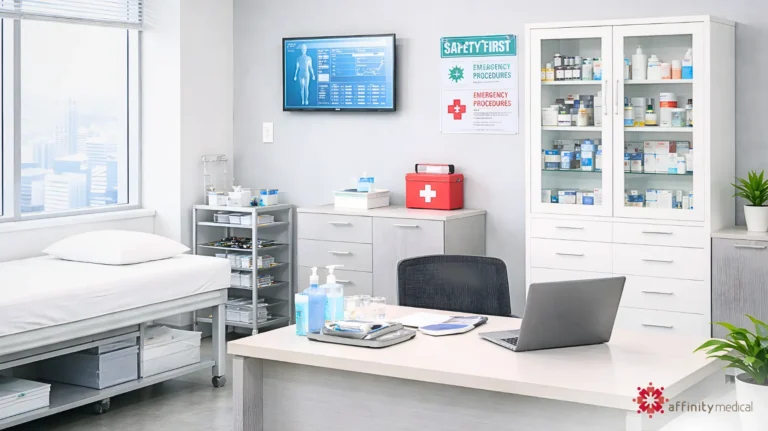
A modern and organized on-site company clinic designed to support employee health, safety, and workplace wellness.
On-site clinics succeed because they are:
- Accessible during working hours
- Familiar and trusted by employees
- Integrated into company policies and workflows
- Focused on prevention, not just treatment
Healthcare becomes part of daily operations, not an external disruption.
Not a Replacement — But a Smarter Front Line
On-site clinics do not replace hospitals or specialists. Instead, they serve as a front line of care, ensuring that employees receive the right level of care at the right time.
This coordination reduces strain on emergency services while ensuring employees are appropriately referred when needed.
How Affinity Medical Clinics Supports On-Site Healthcare
At Affinity Medical Clinics, we help organizations design and manage on-site clinics that:
- Reduce unnecessary absences
- Improve medical response time
- Support chronic disease management
- Align with OSH and workplace safety requirements
- Integrate seamlessly with existing healthcare providers and HMOs
Our approach emphasizes practical outcomes, employee wellbeing, and operational continuity.
A Proactive Approach to Workforce Health
Reducing absenteeism and ER visits isn’t about discouraging employees from seeking care — it’s about making care accessible, timely, and appropriate.
On-site clinics empower organizations to move from reactive healthcare to preventive, workplace-centered medical support.
For guidance on implementing or optimizing an on-site clinic, Affinity Medical Clinics is ready to partner with your organization.