
Published by Affinity Medical Clinics
A clear introduction for employers, HR professionals, and organizations
Understanding Occupational Health
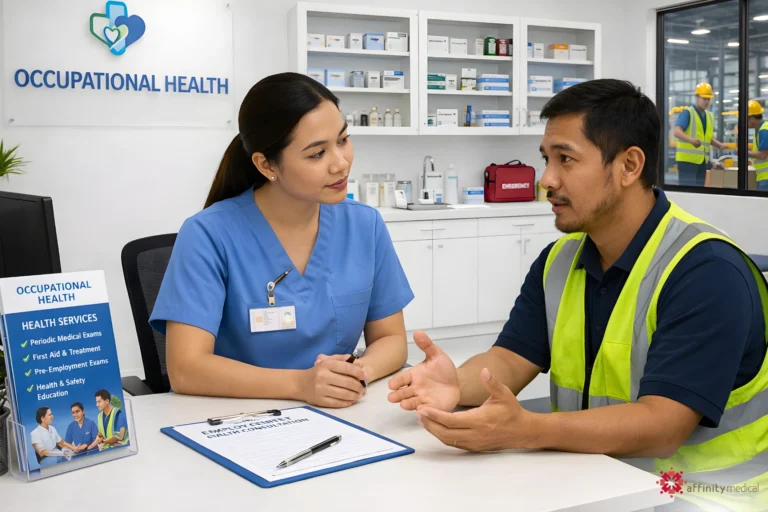
A workplace health consultation between an occupational nurse and an employee, promoting early care and employee well-being.
Occupational health is the branch of healthcare focused on protecting and promoting the health, safety, and wellbeing of people at work. It looks at how work affects health—and how health affects a person’s ability to work safely and effectively.
Rather than treating illness only after it happens, occupational health emphasizes prevention, early detection, and risk management in the workplace.
Why Occupational Health Exists
Workplaces expose employees to different risks depending on the nature of their job. These may include:
- Physical hazards
- Repetitive or ergonomic strain
- Exposure to chemicals or biological agents
- Long working hours or shift work
- Stress and mental fatigue
Occupational health exists to help employers identify these risks early, reduce harm, and support employees in staying healthy while performing their roles.
Occupational Health Is Not Just for High-Risk Industries
A common misconception is that occupational health applies only to factories, construction sites, or industrial settings. In reality, all workplaces benefit from occupational health, including:
- Corporate offices
- Retail and service industries
- Healthcare and laboratories
- Logistics and transportation
- BPOs and shift-based operations
Even office-based work carries health risks such as hypertension, diabetes, musculoskeletal problems, stress, and burnout.
Core Components of Occupational Health
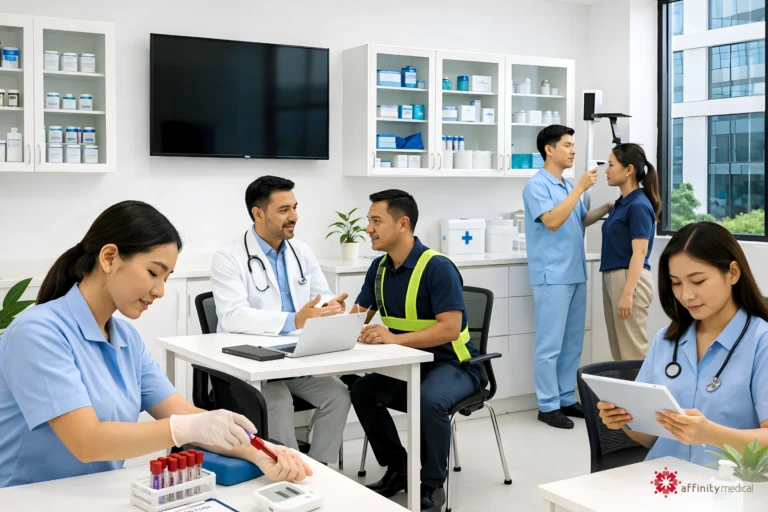
Employees receive comprehensive health assessments in a modern workplace clinic, supporting a safer and healthier work environment.
1. Preventive Medical Examinations
Occupational health includes pre-employment and periodic medical exams to:
Establish baseline health status
Identify conditions that may affect job safety
Detect chronic diseases early
Many employees first learn they have hypertension, diabetes, or vision issues during routine workplace exams.
2. Fitness-to-Work and Return-to-Work Assessments
These assessments help determine whether an employee:
- Can safely perform job duties
- Requires temporary work restrictions
- Is ready to return after illness or injury
The goal is safety—not exclusion—and appropriate accommodation when needed.
3. Workplace Health Risk Assessment
Occupational health looks beyond individual employees and evaluates:
- Job-related hazards
- Work processes and environments
- Patterns of illness or injury
This helps employers implement controls that reduce risk at a systems level.
4. Health Surveillance and Monitoring
In some roles, ongoing monitoring is needed to detect early signs of work-related illness, especially for:
- High-risk or safety-sensitive positions
- Jobs involving exposure to hazards
- Shift-based or physically demanding work
Surveillance supports prevention rather than reaction.
5. Emergency Preparedness and First Aid
Occupational health ensures workplaces are prepared to respond to:
- Medical emergencies
- Injuries and sudden illness
- Chronic condition flare-ups
This includes trained personnel, clear protocols, and proper coordination with emergency services.
6. Health Education and Promotion
Education is a key part of occupational health. Programs may include:
- Awareness of chronic diseases
- Stress and fatigue management
- Infection prevention
- Healthy lifestyle guidance
Informed employees make better health decisions.
Occupational Health and Legal Compliance
In the Philippines, occupational health is closely linked to Occupational Safety and Health (OSH) regulations under DOLE. Employers are required to:
- Provide safe and healthful workplaces
- Ensure access to medical and first aid support
- Implement health and safety programs
Occupational health supports compliance—but goes beyond minimum requirements.
Why Occupational Health Matters to Employers
Effective occupational health programs help organizations:
- Reduce absenteeism and presenteeism
- Prevent workplace incidents and emergencies
- Improve productivity and morale
- Lower long-term healthcare and insurance costs
- Demonstrate duty of care to employees
Healthy employees are more engaged, safer, and more resilient.
Occupational Health Is Preventive, Not Punitive
A well-run occupational health program is not about disqualifying employees or policing health conditions. Its purpose is to:
- Protect employees
- Support safe work
- Enable early intervention
- Create healthier workplaces
When done correctly, occupational health builds trust, not fear.
How Affinity Medical Clinics Supports Occupational Health
At Affinity Medical Clinics, we partner with organizations to deliver practical occupational health services, including:
- Pre-employment and annual medical examinations
- Fitness-to-work and return-to-work assessments
- Workplace health risk evaluations
- On-site clinics and medical support
- Emergency preparedness and first aid systems
Our approach is evidence-based, ethical, and aligned with real workplace needs.
Occupational Health Is an Investment in People
Occupational health is not just a compliance requirement—it is a long-term investment in employee wellbeing and organizational stability.
By focusing on prevention, early detection, and preparedness, companies can create safer workplaces where employees can perform at their best.
For guidance on occupational health programs and services, Affinity Medical Clinics is ready to support your organization.