

Published by Affinity Medical Clinics
A practical guide for employers, HR teams, and safety officers
Why Medical Emergency Preparedness Matters
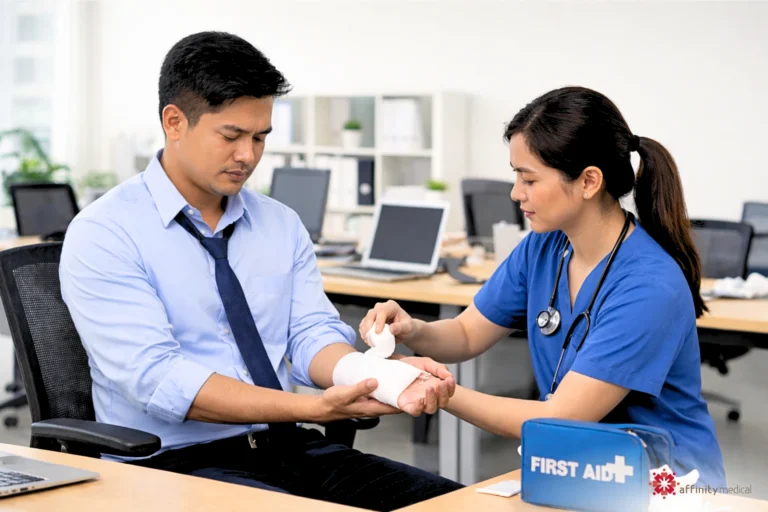
An occupational health nurse provides first aid by bandaging an employee’s injured hand inside a workplace clinic.
Medical emergencies can happen in any workplace — from offices and retail spaces to factories and construction sites. These events are often unpredictable, but how an organization responds can make a critical difference in outcomes.
Effective emergency management is not about expecting the worst. It is about being prepared, organized, and able to respond calmly and correctly when it matters most.
Common Medical Emergencies at Work
While the nature of emergencies varies by industry, some of the most common workplace medical situations include:
- Sudden collapse or loss of consciousness
- Chest pain or suspected heart attack
- Severe allergic reactions
- Asthma attacks or breathing difficulty
- Diabetic emergencies (low or high blood sugar)
- Seizures
- Heat exhaustion or heat stroke
- Workplace injuries and trauma
Many of these situations require immediate action before external medical help arrives.
The First Minutes Matter
In medical emergencies, the first few minutes are often the most critical. Prompt and appropriate response can:
- Prevent complications
- Reduce severity of injury or illness
- Improve survival and recovery
- Maintain order and calm in the workplace
Delays caused by uncertainty, lack of training, or unclear procedures can worsen outcomes.
Key Elements of Managing Medical Emergencies at Work
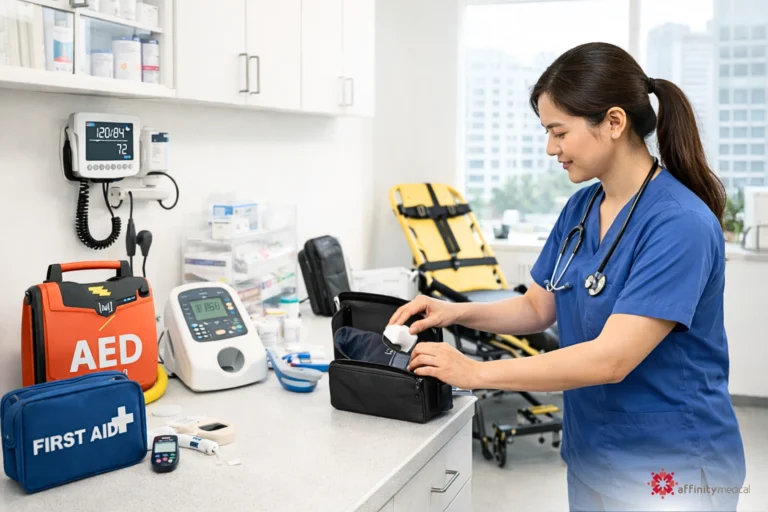
An occupational health nurse organizes emergency medical equipment, including a first aid kit and AED, inside a workplace clinic.
1. Clear Emergency Response Protocols
Every workplace should have documented procedures that clearly outline:
- Who to contact during a medical emergency
- When to call emergency medical services
- How to secure the area and assist the affected employee
- How to document and report the incident
Protocols should be easy to understand and accessible to employees.
2. Trained First Responders
Designated first aiders or safety officers should be trained to:
- Assess the situation quickly
- Provide basic life support and first aid
- Use emergency equipment such as AEDs if available
- Communicate effectively with emergency responders
Training should be refreshed regularly to ensure competence and confidence.
3. Readily Available Emergency Equipment
Workplaces should maintain appropriate medical supplies, which may include:
- First aid kits
- Automated External Defibrillators (AEDs), where applicable
- Blood pressure monitors
- Glucose testing supplies
- Stretchers or wheelchairs for safe transport
Equipment should be well-maintained, visible, and accessible.
4. Coordination With Emergency Services
Clear arrangements should exist for:
- Contacting local emergency medical services
- Providing accurate location and access details
- Assigning personnel to guide responders on arrival
This coordination helps reduce response time and confusion during emergencies.
5. Post-Incident Care and Follow-Up
Emergency management does not end once the incident is over. Employers should ensure:
- Proper medical follow-up for the affected employee
- Documentation and incident reporting
- Review of response effectiveness
- Psychological support if needed
Post-incident review helps identify areas for improvement.
The Role of On-Site Clinics in Emergency Management
Workplaces with on-site medical clinics have a significant advantage during emergencies. On-site clinics provide:
- Immediate professional medical assessment
- Faster stabilization of the patient
- Proper triage and referral decisions
- Reduced unnecessary ambulance transport
Even in non-emergency situations, on-site clinics help identify health risks early — reducing the likelihood of emergencies occurring at all.
Prevention: The Most Effective Emergency Strategy
Many medical emergencies can be prevented or mitigated through:
- Regular medical examinations
- Monitoring of chronic conditions such as hypertension and diabetes
- Health education and awareness programs
- Workplace risk assessments
Preventive care reduces both the frequency and severity of medical emergencies.
Employer Responsibilities Under OSH Standards
Under Philippine Occupational Safety and Health regulations, employers are expected to:
- Provide first aid facilities and trained personnel
- Maintain emergency preparedness plans
- Ensure timely medical attention for injured or ill workers
Emergency preparedness is not optional — it is a core component of workplace safety.
How Affinity Medical Clinics Supports Emergency Preparedness
At Affinity Medical Clinics, we help organizations strengthen their emergency readiness through:
- On-site clinic planning and management
- First aid and emergency response training
- Health risk assessments
- Chronic disease monitoring programs
- Development of emergency response protocols
Our goal is to help employers respond confidently, competently, and compassionately when emergencies occur.
Preparedness Builds Safer Workplaces
Medical emergencies may be unavoidable, but chaos and poor outcomes are not. With the right systems in place, workplaces can respond effectively — protecting employees and maintaining operational stability.
For guidance on workplace emergency preparedness and occupational health services, Affinity Medical Clinics is ready to partner with your organization.